

Speculative Choreographies:
Bodies, Economies, and Movement in a World in Flux
Register Now!
Now Available: Conversations Across the Field of Dance Studies vol 44
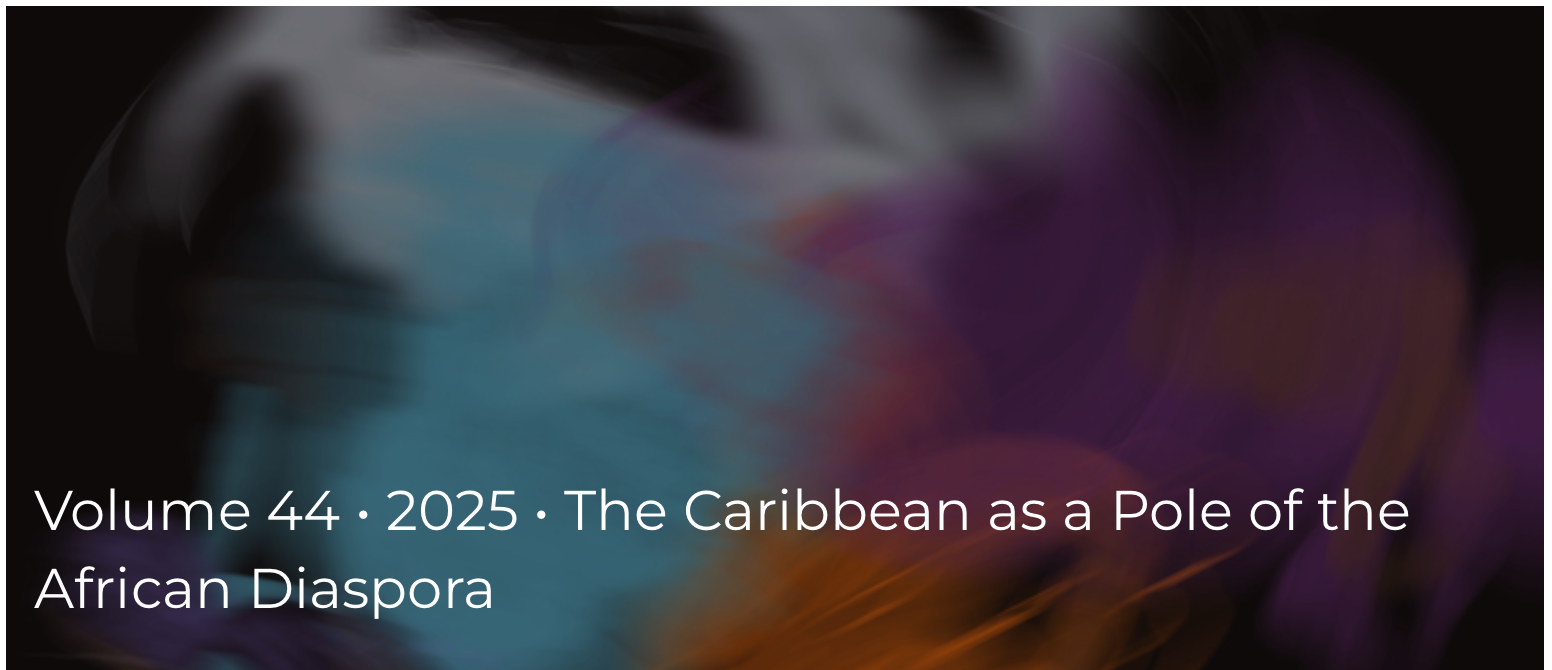
Guest Editors: Emilie Jabouin & Karla Etienne This issue, titled The Caribbean as a Pole of the African Diaspora, centers Ayiti (Haiti) as a locus for rethinking the entangled genealogies of African and Caribbean rhythms, dances, spiritualities, and identities. Curated by guest editors Emilie Jabouin and Karla Etienne, both Afro-descendant francophone women raised in Haitian households in Canada, the volume explores how dance acts as an embodied archive of belonging, resistance, and interconnection across the Black Atlantic. The editors frame this issue as a dialogue between the Caribbean and Africa—not as a one-directional flow from Africa to the Caribbean, but as a network of ongoing, reciprocal exchanges of rhythm, ritual, and philosophy. The collection draws together artists, scholars, and practitioners whose works trace how African aesthetics, cosmologies, and embodied practices persist, transform, and regenerate through Caribbean dance forms such as yanvalou, limbo, kokobalé, kumina, and in carnival. These dances articulate histories of displacement and liberation while foregrounding the drum, the body, and spirituality as central to life, memory, and revolution. Read the Issue NowCover image credit: Myrtle Henry Sodhi (AfroQuill), A Movement Across Time, November 2025 Cover image description: This digital image captures the idea of Ubuntu as expressed through dance and movement. Being through and with others is a movement across time. Steps, twists, folds, and reaches are echoed from the past, expressed in the present, and reverberate into the future. Dance is a way to feel together--through each other. This does not mean we disappear into each other but rather we appear through and with each other. Call for Editorial Board Members: Studies in Dance: Theories & Practices Book SeriesA Studies in Dance editorial board member serves a three-year term. We seek to build a board with coverage of a wide and balanced range of expertise. Specific duties include:
Eligibility/Qualifications include:
To apply, please submit a one-page letter of interest and current cv to [email protected] with SUBJECT: Studies in Dance, Editorial Board Applicant - NAME by June 1st, 2026. Position begins Sept 1st. |